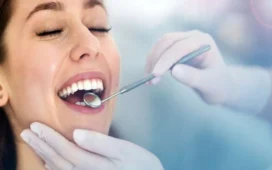
Most people fear tooth cleansing. Between the prompting, unusual sounds, and irregular jaw uneasiness, it’s easy to understand their fear. But for many, teeth cleansing is very smooth and simple. Understanding the exact procedure gives you relief and comfort and lets you have better fun with zesty results.
1. A bodily test.
Mostly, tooth cleansing is carried out by a dental care provider. Before they begin with the actual procedure, they start with a physical examination of your entire mouth. The dental care provider utilizes the tiny mirror to look around your teeth and gums for any indications of inflamed gums (gingivitis) or other possible problems. If they find out any major issues, the dental care provider may check with the dentist to ensure it’s fine to move forward.
2. Erasing plaque and dental calculus.
With the tiny mirror directing them, the dental care provider utilizes a scaler to erase plaque and dental calculus around your gum area, as well as between your teeth. You’ll hear scratching, but this is normal. If you ever experience sudden pain or severe buildup, visiting an emergency dentist arlington va can help address the issue promptly. The more calculus is present in your mouth, the more time it will take to scratch a specific area. Brushing and dental cleaning prevent plaque from forming and hardening into calculus. Once you have a calculus, you can only have to take it out in a dental clinic. So, to escape this process, brushing and interdental cleaning more often are required.
3. Powdery toothpaste washing.
After your teeth fully become calculus-free, the dental care provider brushes your teeth with a dynamic electric brush, which makes a crushing noise. While it sounds terrifying, it is an amazing way to get intense cleaning and erase any calculus that remained behind the scaler. Expert cleanings utilize toothpastes that smell and taste like usual toothpaste, though you can select the flavors. Although it has a powdery consistency that smoothly rubs your teeth. If it is done by an expert, this polishing of the teeth is considered to do two times a year. But don’t be so rough on your teeth, because it can wash out the enamel.
4. Professional interdental cleaning.
Interdental cleaning is also known as flossing. Whether you do interdental cleaning at home or not, nothing can give you the feel of an expert interdental cleaning session. Your dental care provider can get intense between your teeth and address any possible problems where there may be blood flow at the gums. This might seem meaningless if you do interdental cleaning at home, but having an expert interdental cleaner helps you to remove any excess plaque or toothpaste from the previous cleaning process.
5. Washing.
Next time, wash your mouth to get away of any kind of plaque or calculus. Your dental care provider will usually give you a wash that consists of liquid fluoride.